Federal Cabinet Approves New Designs for Pakistan’s Currency Notes
The federal cabinet has approved new currency note designs with advanced security features to curb counterfeiting. The notes will use durable material, reducing the cost of frequent reprinting.
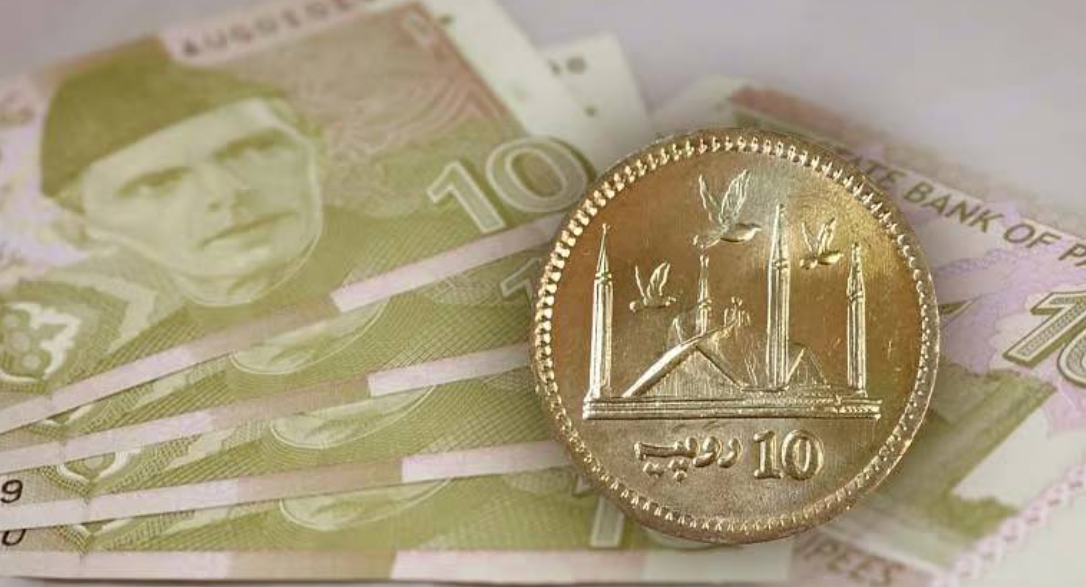
The cabinet also decided to discontinue the Rs10 note and introduce a Rs10 coin. Officials said low denomination coins last longer and will improve the distribution of currency in the market.
The Story in Your Pocket
The Rs10 note in your wallet has been places you would rather not think about. It has paid for a samosa, ridden in a rickshaw driver’s shirt pocket, been licked by a thumb at a vegetable stall and folded into a shape no printer intended. By now it is soft as cloth. Limp, almost. It is probably the most handled piece of paper you own.
This week the federal cabinet decided it should retire. The Rs10 note will be discontinued and a Rs10 coin will take its place, a decision announced alongside approval of new designs for the country’s other currency notes.
The official reasoning is practical, and it holds up. Ministers were told that low denomination coins outlast low value notes everywhere in the world, which makes sense once you think about who handles small money. Nobody treats a Rs10 note gently. It spends its whole short life in transit. Replacing it again and again costs the exchequer real money, while a coin simply keeps going.
Then there is counterfeiting, which the briefing described as a major challenge in recent years. The new notes carry security features that are hard to copy, so that ordinary people and bank staff can spot a fake sooner. Sturdier material means longer life, and longer life means fewer reprints. On a spreadsheet, it all adds up.
But a spreadsheet is the least interesting place to read this story.
Consider what a banknote actually is. It is the one piece of government paper that almost every citizen touches daily, without being asked and without filling in a form. You renew a passport once in a decade. You handle cash before breakfast.
The designers seem to know it. According to the cabinet briefing, artists, art experts and professional designers from across the country were invited to submit ideas, and a special committee chose among them after speaking with economists and financial institutions. The finished designs carry motifs from the country’s culture, history and development.
Look at that last word, sitting beside culture and history as though it had always belonged there. A note is a small canvas, and deciding what goes on it is an argument about what the country finds worth showing. What you place next to the past says what you expect from the future.
Now picture a shopkeeper handing back change. A note may change hands dozens of times before it finds a bank again, and every handoff is a tiny silent ritual of trust. You accept the paper because you believe the next person will. A crisp, hard-to-fake note feeds that belief. A tattered or doubtful one chips at it. Anyone who has watched a shopkeeper hold a large note up to the light knows the small hush that follows.
Forgery does damage beyond the money lost. It teaches people to squint. A society that squints at its own cash is a society slightly less sure of itself.
The coin is the quieter half of the story. Coins have weight. They ring when dropped on a counter, a sound no note ever makes. Plenty of people will miss the soft paper Rs10 at first, the way you miss a worn pair of chappals. Habit is stubborn. Change boxes will fill with metal, and there will be a few awkward weeks of fishing through pockets for the right piece.
Yet there is respect in the switch. Giving the humblest denomination a sturdier body says that small money deserves to be made well, because small money is what most people actually live on. The tea seller and the student counting out a bus fare are the real circulation of a currency. A country that designs for them has noticed who is paying.
None of this is guaranteed to work. Beautiful notes can still be forged, and sturdy coins can still vanish into drawers and jars. Everything depends on the rollout: how quickly the notes reach the market, how clearly the public is shown what to look for, whether banks and traders are ready.
Still, when a crisp new note lands in your hand, hold it a moment longer than you need to. Turn it toward the light. Somebody argued over every inch of it, and what they chose to show you is how the country wants to be seen when it is not looking.