
WhatsApp Begins Testing Message Scheduling Feature
WhatsApp is testing a message scheduling feature that will let users send messages at a specific date and time. The feature is now available to a limited number of beta testers using WhatsApp for Android through the Google Play Store.
The new feature works in both individual and group chats. Once a message is scheduled, WhatsApp will deliver it automatically at the selected time, even if the sender’s device is offline.
Users can schedule text messages, links, photos, and videos. However, each scheduled message currently supports only one image or video. Like regular WhatsApp messages, scheduled messages remain protected by end-to-end encryption.
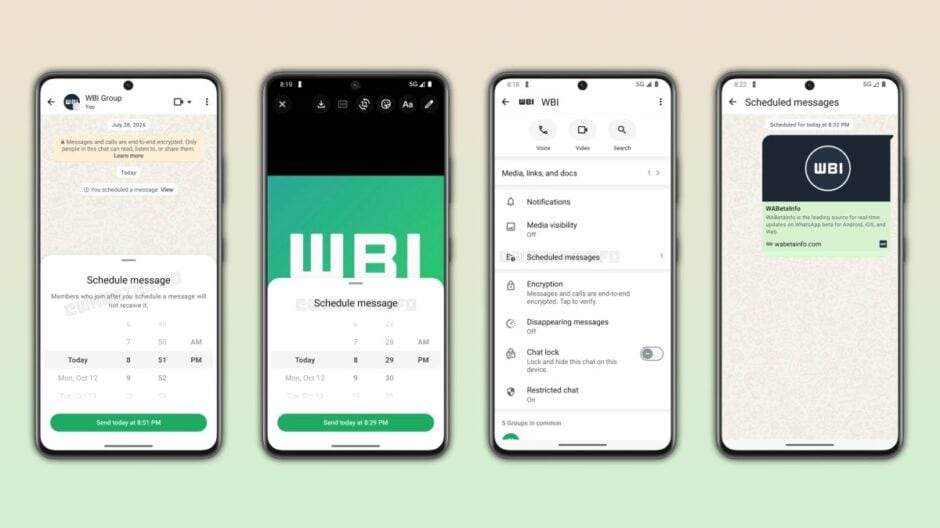
To schedule a message, users will need to tap and hold the send button in a chat. WhatsApp will then show an interface where they can choose the delivery date and time. The feature allows scheduling messages as early as 10 minutes ahead and up to two weeks in advance.
Scheduled messages will appear in a dedicated section within the chat information screen. Users can review, manage, or delete them before delivery. Recipients will not be notified when a message is scheduled or deleted before being sent.
Group chats have one additional restriction. WhatsApp will deliver scheduled messages only to members who belonged to the group when the sender scheduled them. As a result, anyone who joins the group afterward will not receive that message.
The feature is currently limited to a small group of Android beta testers. WhatsApp has not announced a public release date, but a wider rollout could follow after further testing.