Pakistan Among 10 Worst-Hit Countries in Global Hunger Crisis
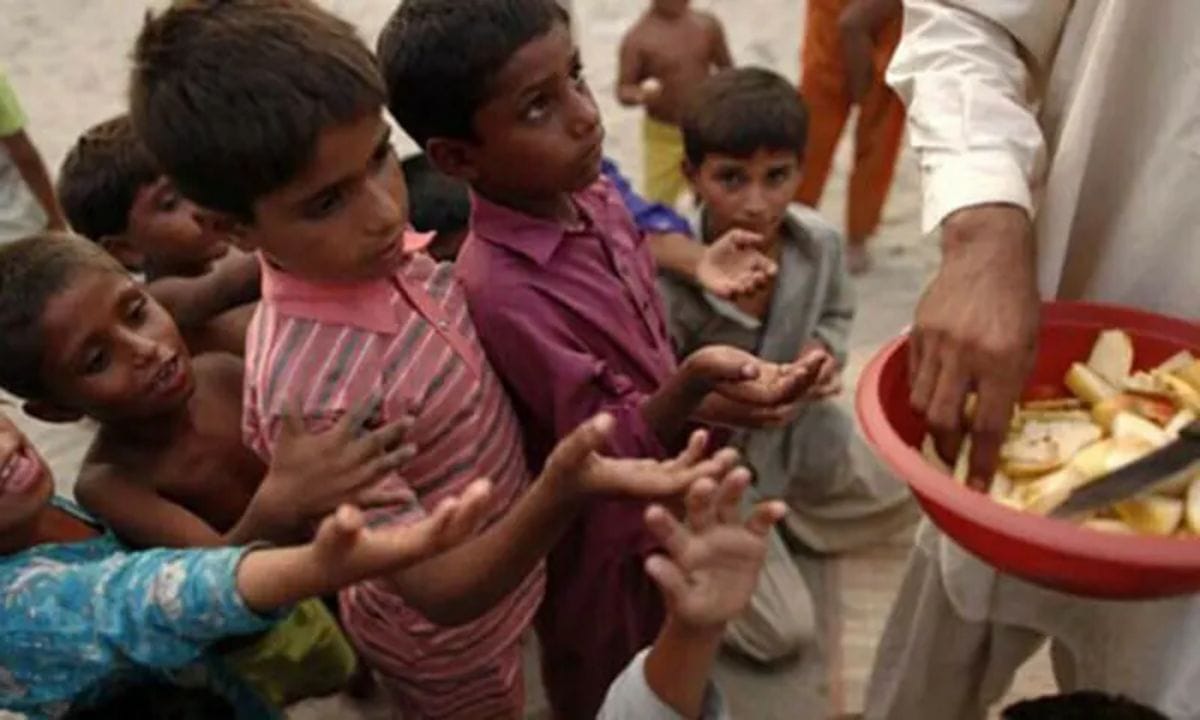
An estimated 10.6 million people in Pakistan will need humanitarian assistance in 2026, according to a new report by Action Against Hunger that ranks the country among the 10 worst-affected by the global hunger crisis.
The report, Ten Largest Global Food Crises, was released on Friday to mark World Food Day. It names Nigeria, Congo, Sudan, Yemen, Afghanistan, Myanmar, Bangladesh, Pakistan, South Sudan and Syria as the countries facing the largest food crises.
About 177 million people live in these 10 countries. Acute hunger has doubled over the past decade and now affects 266 million people across 47 countries.
In Pakistan, persistent poverty, high food inflation, rising living costs, limited job opportunities and declining household incomes are reducing the purchasing power of families. Unfavourable agricultural prices and wider economic instability have further weakened livelihoods.
As needs outstrip available resources, vulnerable households are cutting food consumption, selling productive assets and withdrawing children from school. The report states that these measures may bring short-term relief but can deepen poverty, harm education and nutrition of children, and reduce the ability of families to withstand future shocks.
Limited access to healthcare, nutrition services, clean water, sanitation and hygiene, and social protection is worsening the situation, particularly in rural and disaster-affected areas. Cuts to support services and livelihood programmes are further weakening community resilience.
Climate-related disasters remain a major cause of food insecurity. Recurrent floods, droughts, heatwaves, glacial lake outburst floods and erratic monsoon rains have damaged infrastructure, reduced agricultural output and hurt livestock-dependent livelihoods. Crop losses and prolonged dry spells have made households more reliant on markets for food, while several districts continue to face drought.
The report identifies the lean season from December 2025 to March 2026 as a period likely to worsen food insecurity. In some areas, extended winter conditions and heavy snowfall are expected to restrict access to markets and essential resources.
Localised insecurity in Khyber Pakhtunkhwa and Balochistan is also disrupting livelihoods, restricting access to markets and hampering humanitarian operations, the report adds.
World Bank Report
Earlier this month, the World Bank said that Pakistan is home to almost half of the extremely poor population in the Middle East, North Africa, Afghanistan and Pakistan (Menaap) region.
In its Economic Outlook, issued ahead of the IMF-World Bank annual meetings, the bank said Pakistan accounts for about 48 per cent of the region’s people living below the $3.00-a-day poverty line. Afghanistan, Syria and Yemen together account for another 47 per cent.
Menaap is the only region in the world where poverty remains above pre-pandemic levels and continues to rise. In 2024, 14.3 per cent of its population lived on less than $3.00 a day, compared with 10.4 per cent globally.
The increase was driven mainly by Pakistan, where the poverty rate rose by 6.4 percentage points at the $3.00 line and 3.2 percentage points at the $4.20 line between 2018/19 and 2024/25.
The bank attributed this to the Covid-19 pandemic, the 2022 floods, high inflation, currency depreciation and a prolonged period of economic adjustment that weakened household incomes and jobs.
The bank projected Pakistan’s GDP growth at 3.7 per cent in FY26 and 3.8 per cent in FY27, up from 3.2 per cent in FY25. It estimated the fiscal deficit at 2.6 per cent in FY26, rising to 3.5 per cent in FY27, and the current account deficit at 0.1 per cent in FY26, widening to 0.8 per cent in FY27.
It noted that food insecurity is acute in the West Bank, Gaza and Yemen, with significant pressures also in Afghanistan, Djibouti, Lebanon and Pakistan. A stronger-than-usual El Niño predicted for late 2026 could further raise food prices, and Pakistan is directly exposed through changing monsoon conditions.
The bank added that economic losses from the US-Iran conflict remain highly uncertain. Oil-importing countries, including Pakistan, face inflationary pressure, reduced fiscal space, lower remittances from Gulf economies and higher borrowing costs. A prolonged slowdown in tourism and construction could also reduce income flows to labour-sending economies such as Pakistan.