
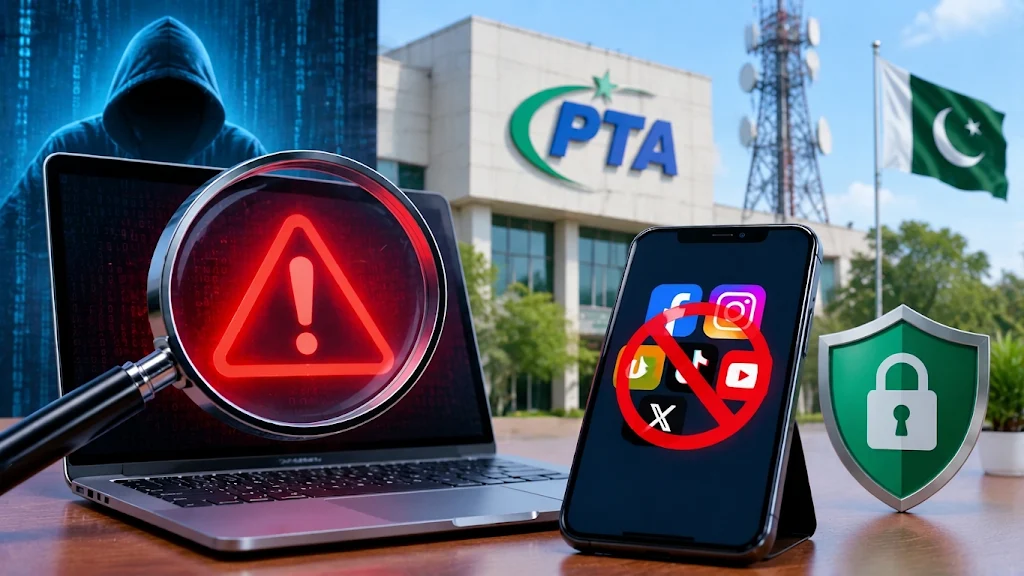
PTA Identifies Hundreds of Malicious Websites, Apps and Social Media Accounts in a Year
Pakistani internet users face a growing risk from fake websites, harmful mobile apps and fraudulent social media accounts. Criminals use these to trick people into sharing personal information or falling for online scams.
The Pakistan Telecommunication Authority (PTA) identified and processed 586 malicious online sources between July 2025 and June 2026, according to its Cyber Security Annual Report for 2025 to 2026. These included 152 dangerous website links, 48 malicious mobile apps and 386 suspicious social media accounts and pages.
The report says many of the threats involved fake websites, impersonation, phishing scams and the spread of harmful online content. In these cases, criminals pose as genuine individuals or organizations to deceive users. Phishing scams in particular try to get people to reveal sensitive information through fake messages, websites or other online channels.
Social media was among the biggest sources of these threats, with 386 suspicious accounts and pages flagged during the year.
PTA said September 2025 saw the highest number of malicious online sources detected during the reporting period.
The authority found these threats through its National Telecom Security Operations Centre (nTSOC). The centre monitors online activity around the clock for suspicious websites, accounts, applications and other cybersecurity risks. Its monitoring covers the open internet, social media platforms and hidden areas such as deep web and dark web forums. The aim is to catch threats before they cause further harm to citizens, government bodies and telecom infrastructure.
PTA said it has strengthened its systems for detecting and analyzing online threats. Once suspicious activity is found, the authority assesses the risk and shares the relevant information with other organizations so that preventive action can be taken. It also issues cybersecurity advisories and works with telecom operators, the National Cyber Emergency Response Team (National CERT) and other stakeholders.
According to the report, these steps are meant to detect cyber threats earlier, prevent attacks and improve the security of Pakistan’s internet and telecommunications infrastructure.